GEM MEDIA

GEM MEDIA

Wednesday, 4 February 2015

Navigation Vs Content on your website


There has been a lot of talk in the marketing world recently about content marketing and how it helps to attract more customers to your website, increasing the chances of your website getting to number 1 on Google, but I’d argue that a company website is more important than content, especially when it is a website that holds the content together.

I’ve seen some brands focusing on their content marketing and tweeting links to their website and/or blog through social media, yet when you click through and find a website that doesn’t welcome nor engage with you, the likelihood of you leaving the website is pretty high.

It’s the same as a shop for example, you walk past and see an advert on the door stating ‘new summer collection’ brochure available in store, so you enter the shop but when you enter it’s a dark, dull and gloomy store and you realise that actually it isn’t somewhere you want to shop and your instinct rejects taking a brochure and then you leave the shop. Well it’s the same as a website, why do you want to read content on a dull and gloomy website? You don’t and neither will your target audience. Your website is your shop front and the purpose is to invite interest and educate your audience on what your company does.

So how do you design your website in a way your customers won’t leave?

Easy. Think of it like a book, you open the book and you have a list of contents navigating you to the topic you want on a specific page number. Well, it’s the same on your website, but instead of having page numbers, you have different links for users to click enabling them on a simple journey through your website. 

The different links can be anything from menus, text link, buttons and/or drop down navigation, all of which enables the user to navigate your website in the way they want too, clicking link after link, without realising they have read multiple pages of content and engaged with everything you have had to say. Does that sound good? Of course it does- wouldn’t it be great if every user that come to your website viewed every single page?

Here are 3 tips to remember when designing the navigation of your website:

Provide a variety of options.
Every user navigates differently on a website and good navigation is not about ‘go here’, ‘go there’, but it is about giving them a variety of option to choose from. Most websites have a primary and secondary menu to give users a selection of pages which they most likely want to view and then content that is of secondary interest, for example FAQ’s etc which can often be found in the footer of a website.


Let readers know where they are.

With the variety of links available, users can become ‘click-happy’ and find it difficult to return to the page they were on, which is why it is equally important to let the user know what page they are on. (This can be done through breadcrumbs which provide keyword links on your page).

Consider road signs for example, they are not forceful in suggesting what way you should go, instead they help prompt your direction and let you know where you are, in the same way a website should tell you what page you are on and let you know there are other pages to see if you wish also.


Consistency is Key.


When visitors come to your site you want them to figure out how to navigate quickly. Usually this is done by a bar at the top of every page that stays the same. The visitors will soon learn through repetition, how to get around your website and the consistency will improve their overall experience on your website.


An aspect of consistency differs and does not solely include the navigation. It also includes the tone and language, look and feel. 

Take a look at  Dior’s & Carlsberg’s website which won awards for navigation in 2014: http://www.dior.com/beauty/en_int/minisite/dior_addict.html
Agree? Disagree? share your thoughts on Navigation Vs Content...

For further enquiries regarding Web Design, please email hi@gemmediamk.com

Follow @gemmediamk www.twitter.com/gemmediamk


Wednesday, 31 December 2014

5 ways to kick start your marketing in 2015

The new year is inevitability a time to reflect on last years marketing strategy and think of new ideas and resolutions to get your brand noticed. Here are 5 ways you can kick start your marketing and get ahead in the new year:

1. Understand Mobile is your priority.

Mobile is no longer a secondary channel, it has fast become first choice for consumers. The number of daily active users on Facebook has grown by 15% in 2014. These stats are enough to suggest all businesses should consider how their digital presence can cater to the mobile user.

The way to do this is by integrating social and mobile media. Your mobile strategy has to evolve to the new digital world and the consistent content experience, engagement and interaction with users.

Mobile revenue is predicted to jump more than 300% over the next 4 years so get ahead and ensure your mobile commerce is effective. Don't let sales slip away, ensure your website is fully mobile optimized. Encourage social media followers & fans to download your mobile app. Why not offer users an incentive to do so?

2. Amplify social media paid posts.

In 2014 we noticed Facebook pushing it's promoted posts as a way to monetize the platform and businesses began to use this feature as a way to increase their outreach.

In the new year, brands need to ditch the whole 'social media is a free place to market' attitude and instead think about audience segmentation to target the right people with the right message.

Once we're aware of the segment, the money we invest into sponsored Facebook ads or promoted tweets can help increase likes & follows and engagement.

Facebook looked at 60 campaigns and 70% that used paid ads had 3x better ROI.

3. Commit to blogging on a weekly basis.

Content marketing was the way forward in 2014 to help increase SEO and build momentum. Whilst blog posts, e-newsletters and social media are all valuable channels to build relationships, create trust and ultimately increase sales, , a recent study proved marketers struggled to find out if content marketing was working for them.

Start by blogging with a post that answers questions about your field, how-to-articles and tips. Show off your knowledge and sell yourself. By doing so you will build a following which will increase the conversion to your website, giving you the chance to sell your products/services.


4. Create local content.

We have mentioned blogging is a valuable channel for content marketing, but how do businesses create content on their blog that is tailored for local search?

A wide array of competition in local areas means it is increasingly important to tailor content so that when users are searching on their mobile device your business will be the first to appear. To generate viable search traffic, local businesses should focus on building an online community.

An online community can be developed by attending local events and making effort to socialise with businesses on Facebook and Twitter. It is also a good idea to use a blog to post relevant content and also seasonal topics within the local community are a good way of generating awareness.

TIP: You can't do it alone. It is all about nurturing your audience!


5. Influence your audience through Vlogging.

Videos are easily the most preferred types of content online due to our short attention span, but also due to the devices we view them on. In 2014 we noticed Facebook's algorithm is playing a part in this pushing video higher in our newsfeed.

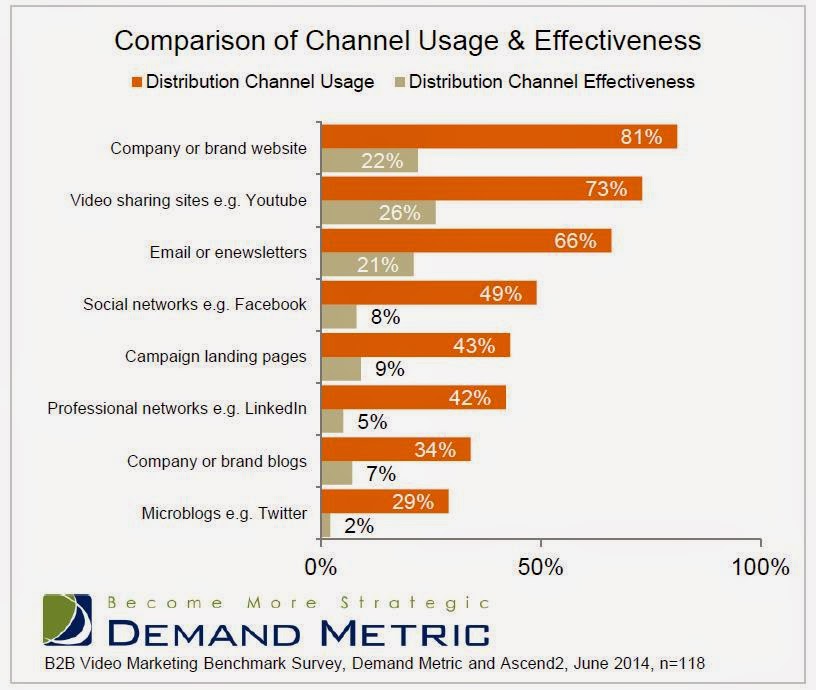
The graph below shows the best placement for video, with 81% found that the primary place was a companies website and 73% found that the secondary place was YouTube.

Vlogging 

A trend that we will really see increase in 2015 is Vlogging with the power of video marketing and mobile media, more brands will adopt blogging through video to meet the demands of their audience.

Thursday, 3 July 2014

5 of the best World Cup 2014 Marketing Campaigns


1.       Tresor Paris

Fashion and Jewellery brand Tresor Paris created a new campaign to mark the launch of their new watches. The campaign demonstrated the watches through a football freestyle video to link in with the World cup. The background music was The Games ‘Gentleman’s affair’ featuring Ne-Yo.

This video has been emailed to the database and shared via Facebook, Twitter and YouTube to essentially target new customers who wish to purchase the watches.


2.       Volkswagen

Automotive retailer Volkswagen created a new campaign to promote its Golf GTI.  The campaign demonstrated the car on a football pitch having just scored a goal with ‘goooooooooooooooooolf’ GTI as the audio and on screen text.

The video was shown on ESPN.com and Univision.com when a goal is scored throughout the World cup.  To coincide with the teams that are playing, the golf colours will change depending on what country has scored a goal.


3.       Budweiser

The long-standing beer sponsor of the World Cup, Budweiser revealed the ‘Rise as one’ global creative campaign, designed to inspire football fans worldwide to celebrate.

The limited edition packaging will be introduced in 40 countries simultaneously as well as tailor-made exclusives sold in retailers.

The packaging also includes on pack consumer promotion giving consumers the chance to go to Brazil’s world cup game in 2014 and other methods such as scan to win.


4.       Gillette

‘The best a man can get’ brand created a special Yellow and green coloured razor to associate with Brazil for the world cup.

5.       Havainas

Brazilian flip flop brand have designed limited edition flip flops in the colour of participating flip flops with a bag and key ring.


So, what can we learn from these marketing campaigns?

It’s about creating moments that touch your customers and being emotive in your approach to punch through the noise and disrupt your customers. Get their attention.

During this specific worldwide event, it is about holding onto your customer base and giving them what they want.
  • Use psychology.
  •  Make relationships.
  • Maintain focus.
  • Grow geometrically. 

Saturday, 31 May 2014

10 rules for effective email marketing

Most of us get junk mail every day, but what exactly do we mean by 'junk' mail? Is it really "junk" when you have subscribed to get those emails? (Well...most of the time!)

We often subscribe to emails to receive offers and promotions, but if you are anything like me you find yourself with a full inbox and no time to sieve through, which is why it is important to make your email stand out from the rest!

Here are 10 rules how to improve your email marketing and engage your readers:

Rule No1: Define your readers

Before you start designing and sending campaigns you need to define your audience and understand who it is you want to talk too. Once you have done so, it will be easier to know how to speak to them. 

The way you can do this is by creating 'Lists' within your email software. 

If the email addresses have been exported from your website, then include them in a separate list, as opposed to the email addresses that have been captured at trade shows, events, enquiries etc. By doing so it differentiates the type of reader they are and makes it easier for you to send more targeted e-campaigns. 

For example, if they have purchased an item from your website they are a 'customer' and will most likely want to hear about new products, whereas if they have 'opted-in' to your database to win your competition at a local event, they can be categorized as 'general public' who can be sent news about your brand and information to your next event.

Learn to understand what they want to read!

Rule No 2: Provide new and exclusive content

Now you understand your audience, you need to consider what to say to them. Emails are not just a sales technique, therefore content is KING!

Content like upcoming events, recaps from the past, photos, Facebook, Twitter, blog info and news are always good to engage with your reader. 

Use short sentences and prevent yourself from writing an essay that is difficult to scan. 

Remember if they like what they see they will share it with others!


Rule No 3: Have Email etiquette

Although social media and mobile are arguably the most popular form of communication, email is still the most direct form. 

People who subscribe to your emails trust in your company and have given you permission to their inbox's. For this reason you need to be consistent with your branding so they can identify who the email is from and feel valued that they have heard about your exciting news first. 

You should also allow readers to easily identify the unsubscribe link. Let the customer know they can unsubscribe and opt out- but reassure them more offers coming soon. The best place to state this is in the footer. 

Don't let them believe your a self promoted robot, give your brand a human personality!


Rule No 4: Always have a call to action

Every email should have a call to action. Something which makes your reader act upon after reading the email. 

 
Incentives like discounts, competitions or freebies work well. Display them with active language such as: Donate, Buy, Register and create a sense of urgency with 'offer expires', 'do it now and receive a free...'. etc.

If your call to action is done right, you can generate real measurable return.  


Rule No 5: Include links


The links within your email are what drives action to your website- your shop window where you have the opportunity to impress the visitor and attract them to read more information on your product/service, which is why you should think carefully where links go on your email...

The main links to include are: Primary call to action,Social media sharing links, Social media follow links, Logo link, Link in the footer and a link in the plain-text version.

To measure the results of the links, you will need Integration between email service provider and web analytics to track landing pages and the consumer journey.

 Social media sharing is more popular than social media follow and extends your user base.

Rule No 6: Send emails at the right time

So far you're targeting lists more accordingly with exclusive content and offering a call to action. Now, you just need to ensure you are sending emails at the right time, in the right frequency.

The best times vary depending on the industry and the audience.

According to Survey Monkey, the best day is Tuesday and Thursday and the best time is after 12pm and between 2pm-5pm.


Email marketing is about quality, not quantity. 
 

Rule No 7: Include visuals

Brands are focusing on the concept of creating a story with their brand, that now is the time to use email campaigns as a way to be the narrator. Make your readers genuinely excited to receive your email with associated imagery that they cannot forget. 

As humans we process images faster than text and we are more likely to absorb visual information.

Rule No 8: Happy Birthday emails

Treat your readers as VIP's. When you capture their data, also get their D.O.B and set up automated happy birthday emails. Give a great personal touch and make the reader want to claim their free surprise/discount. They will never forget you again and they are more likely to tell their friends and then they tell their friends.


Word of Mouth is the best use of marketing.
 

Rule No 9: Measure Success

To understand the performance of your e-marketing you must conduct analysis on the statistics your email service provides.

The ultimate measure of your emails effectiveness is the conversion rate. The higher the conversion rate, the better your email.

 If your delivery rate is getting lower, it may be due to invalid email addresses, bad content or poor subject lines.

Aim for a higher conversion rate and improve your landing page for the user experience. 

Rule No 10: Cleanse Data

The data you have collated is not always correct or relevant and therefore you should find out what emails have not been delivered and remove them from your mailing list.

On the other hand you can see who has opted out of your mailing list, to ensure you are refreshing your data with new names to continue a successful growth rate.

Many of the emails on your list will naturally go 'bad' over time- refresh your data.


Saturday, 24 May 2014

Are you getting the most out of Snapchat?

I recently blogged about the benefits of using Instagram for Marketing, well not far behind is the quickly growing mobile marketing tool- Snapchat. Just when we thought Social media was the newest form of marketing, along comes this form of temporary social media, and I'm about to familiarise you with the strengths and weaknesses of using Snapchat for your business.


There are many well known brands that have already adopted the concept of Snapchat. Particularly brands looking to target the younger audience.


'70% Snapchat users are mostly girls and women younger than 25', report suggests from Business Insider.

The 10 second photo sharing app is an ideal platform for Women younger than 25 and with the growing number of photos snapped per day it is no wonder brands are jumping on board to engage with their young audience.


For example, Mcdonalds used Snapchat photography app to engage with their audience about the launch of their new restaurant.


So where does that leave you business in terms of using Snapchat as a way to communicate with your market?

If your company doesn't fit the niche Snapchat demographic then there would be no point to put Snapchat in your marketing strategy. Especially as there are no metrics to identify the opening rate from your recipients, or online traffic.

Although if your brand DOES fit the younger audience and you are prepared to carry out heavy promotion beforehand to increase your user base, then there is no reason why your brand should not venture to this newer platform.

When joining Snapchat your content needs to be carefully considered as there are limitations to the visuals you send out. The camera app and the doodle function are the only tools your brand has to be creative with and there is no editing functionality, so ensure you are creating a mischievous, attention grabbing and fun image.

For example, Lingerie brand 'Miss Crofton' used Snapchat to build their user base on Facebook with a mischievous image, which goes well with their branding and belief that lingerie is only seen for a few seconds.

Whether you are trying to target a new audience or just add some variety to your social strategy, snapchat is a viable option for a two way conversation.

Some ideas for your snapchat marketing could be new product sneak peaks, discounts, behind the scenes and targeted videos.

The younger generation care on what's now and this is a great way of sharing present moments.Be fun in your approach and be more like a person, rather than a logo.


Although Snapchat is typically the younger audience and has a lot of features missing in comparison to other mobile apps, this could change and enhance to become a more popular and user friendly channel for businesses.

Facebook are already gunning for a similar concept and will be launching their version of slingshot coming soon...

5 things to consider before using Snapchat marketing:
- Promote your existence on other channels, especially Facebook & Twitter.
- Grab the recipients attention with fun images.
- Be creative in your approach as you only have 10 seconds to impress.
- Advertise discounts.
- Take customers behind the scenes for an insight on your business.


Monday, 19 May 2014

Why Google plus is better for business than Facebook...


Selfridge's have partnered with big brands to launch a six week campaign, 'The #BeautyProject' to explore the modern definition of beauty.  
  
The launch of new products, live music and beauty treats are all part of the campaign and are showcased through their Google plus network, for those unable to attend the in store event.


But what really caught my attention was why Selfridge’s choose Google plus as opposed to Facebook? 

Facebook has been the core channel for retailers and has been voted the 1st largest social network, generating millions of like pages from small, medium and large businesses across the world, including high end retailers, that it is surprising Selfridge’s chose Google plus for their latest #BeautyProject.

Here are 4 reasons how Selfridges’s campaign proved Google plus is better than Facebook…

1.    Digital Media 


Selfridge’s #BeautyProject is a 6 week program that features talks, interactive debates and beauty experiences. The debates are hosted by a video blogger and aired via Google + hangouts.

Unlike standalone platform Facebook, Google plus has been developed to be visual and integrates all Google services together such as Gmail, Hangouts on air and YouTube. 

 A hangout in your Google + page can be with an unlimited amount of users, in real time and has the ability to be automatically uploaded and saved to your You Tube channel. 

Whereas, Facebook video calling can only be one-on-one and is not compatible with mobile devices, nor cannot it be instantly updated to your YouTube channel.


2.    Website Conversion


As part of the campaign, Selfridge's have a psychical photo booth in store where consumers can have their photos taken. The photos are then featured on the Selfridge's website.

This clever tactic enables in store consumers to interact with the project whilst directing them to  the website. 

When consumers visit the web page, they can also click through to the Google plus page. 

The incentive for users to visit the Google plus page is the competition whereby the most liked photo will win a £500.00 beauty experience.

The difference in posting this competition on Google plus, rather than Facebook is that a wider audience can see content Selfridge's post.


3.    New audience

On Facebook we accept requests from people we know, or we attract likes on our business page from people who have experienced our product or service, yet on Google plus anyone can add you to one of their circles, without you having to approve or adding them back. 
   

Facebook is a mutual agreement and you agree to be friends with someone from accepting their request. 

Whereas Google plus is a more tech savvy platform and opens the door to engaging with individuals outside your social circle. This explains why Selfridge's launched the event on Google plus.

 For example, if you have 200 friends on Facebook and post an event, it is likely only 20 friends would see. 

Google plus helps build your business, whereas Facebook networks with your existing client base.

4.    Social Annotations 

      The content that Selfridge's are posting have far more of a reach than Facebook, as they are instantly included in Google Search results.  

      Google plus is more than a social network, it is more like an identity and a channel to increase SEO.

      There are also more serious business capabilities on Google plus. The Google + page endorsement being one. The G+ button makes it easier for online users to share your content.

In comparison, the Like button on Facebook would only be shared to the network of friends and accrued to Bing Search results, whereas G+ works as a different social connotation allowing people who are not your friends to also see this content.

      The interface of Google plus is far more clean and uncluttered than Facebook, especially as there is no paid advertising or promoted posts, only Adwords which are featured in the search results of what you are looking for.
   
      
Why Google plus is better?
  •        Better for digital media and integrated with Youtube.
  •        Easier Web conversion from G+ button and SEO.
  •        Anyone can see Google plus content.
  •        G+ makes it easier for users to share your content.
  •        Cleaner platform with no advertising or promoted posts, only content you have chosen to follow.


Wednesday, 19 March 2014

Why the #nomakeup selfie craze has worked...

In the past 24 hours social media has been flooded with hundreds posting no make-up selfies, including the young, the old and the male!


So grab a make-up wipe, join the craze and nominate your friends because the #Breastcancerawareness campaign is working and here is why...

The purpose of any campaign is to achieve a goal and raise brand awareness. Without awareness on a topic how can we react to the cause?

If the selfies had not gone viral would you have thought about breast cancer today? The answer is probably not. 

So the debate that the #nomakeupselfie has caused from being 'pointless' is beyond me, when just a couple of months ago the nation was participating in Dry-anuary. Another campaign that generates awareness on the organization 'Alcohol concern', which encourages us to stay off the booze throughout January in aid of the #Dryathon. We could debate that this campaign is also 'pointless' as it is not necessarily a fundraising exercise, it can just be for health whilst promoting 'Alcohol concern'.

Lets look at another campaign, #Movember. How many guys participate in this trend and grow a moustache? Do all of them donate to Prostate Cancer?

In an ideal world every brand, charity or organization that raised awareness would like a sale, a donation or end result but promoting the name comes first in any instance. Without awareness on who they are, how are they going to benefit?

It's easy for us to think a campaign targeted to women, to check their breasts would be more compelling, but the question is would it be trending and would it make BBC news? Now that #BreastCancer has our attention, it will be easier for them to get any message out. Especially as their social media following has increased since the selfie craze.

I think the campaign is a great idea and it's nice to see so many women participating (even if some have utilised Instagram for a 'natural' tint!).

Although, Cancer Research UK states they have no idea where the campaign from, few charities have jumped on board and you can text 'Beat it' to 70099 to donate.

One charity claims they have received unprecedented levels of donations since the trend, helping them raise over £15,000! Read more here 


5 reasons why brand awareness is crucial:

- Brand awareness is the process of building the brand and informs customers about the business
- Allows customers to recognize and remember the brand & logo
- Ad strategies result in increased sales and repeat business
- People like to give money to brands they trust
- Creates a long term position in the marketplace


Friday, 13 September 2013

Instagram for Marketing


It's been over a year since I signed up to Instagram and like every social media platform there has been some changes. From #Instapics, to #Instadaily and now #Instavideo, the limit is endless for marketeers on mobile app Instagram.

Instagram now has over 150 million users all pounding out hash tags to every photo they post. What easier way to find your market! They are hashtag'ing your business. All you need to do is explore the hash tag of the visual you want to post and discover the niche in the community. For example, when I started the Wonderworld nightclub Instagram profile, I would explore the hashtag '#MK', '#MiltonKeynes', '#MKClubbing' and follow the people within my target audience. This built my following immediately.


My Instapics consisted of cross platform promotion to Facebook and Twitter sites, flyers to different club nights, photos of the venue, the crowd, competitions, products and prices. Never forget the 4 P's: Price, product, place & promotion! Photos are a great way to engage consumers and the mobile app allows you to be creative with it, editing & enhancing pics or even creating collages. But when is the best time to post photos to Instagram?

Simplymeasured has a fantastic study into engagement with Instagram and finds the best time to post pictures. As you can see in the diagram 5pm -6pm is the best time for engagement where you will receive most comments.


When posting pictures to Instagram be sure to share them on Twitter and Facebook to reach new users, especially as Facebook photos have a 39% engagement rate. The ultimate recipe for higher engagement!

As spotted from socialbakers Fans significantly prefer pictures to anything else.


Amongst the growth in photo marketing, we have also seen the rise in video marketing. Have you tried Instavideo yet? I tried it for the first time the other day and received more likes and comments than I have done on any of my Instapics! There has definitely been a boom in Instagram videos, Vine & Youtube that there is more of an appetite for videos.

Video's have always been costly but the fact you can do it on your mobile is making it easier than ever to do a 15 minute shoot with editing facilities, as proven recently in some major brand campaigns. For example lets take a look at Red Bull's unremarkable Instavideo which achieved an astonishing 32,557 likes and 445 comments!

It is no surprise there are rumours to add advertising to Instagram. Do you think this will be a success? Would you pay to advertise? Leave your comments and let me know how you think this will work out....


Wednesday, 28 August 2013

MK College Guerilla Marketing

Busy at work I didn't have much time to read behind it, but I wondered why I kept seeing this one particular person around Milton Keynes. I went to get my lunch in Xscape and he would be there, shopping in The Centre MK and he would be there.

Friends on Facebook started to post about this mysterious person and within a week or so he went viral!


He was handing out cards with a date on and a link to a microsite. When you logged on it was a countdown timer.

The people of MK were so captivated by this Guerilla marketing tactic, that news quickly spread. 

All was revealed that the countdown was for MK College and this character was REKO TAO ZION, also known as the time Traveller.  The Time Traveller’s mission was put together by a team lead by the College’s Head of Marketing & Communications, Kate Raclawski.  “The Time Traveller is part of our wider campaign to reach people aged 16-19 and to encourage them to really think about their future,” she says.

MK Citizen reported the microsite had received 200,000 hits three days before his true identity was revealed. 

At a low budget, I'm surprised more companies are not turning to unexpected and unconventional marketing strategies like this one. We will see if any other local businesses take an unusual approach like this one...

Sunday, 3 February 2013

FREE popcorn!

It is not often you get a flyer initiating FREE popcorn, so once I heard about it, I quickly paced over to the stand which surprisingly was a black tent with arrows saying 'this way'.

As soon as I got in the tent there was an Australian lady with 2 pots of popcorn. She asked me to choose one pot, in which I did and found it was empty! The lady asked me to think about poverty and how children must feel when they have no food. This definitely made me analyze what just happened.

I was given a stamp and a wrist band, which made me think about it for the rest of the day. I also told my friends and got the attention from locals when they asked why I have a stamp.  

This campaign was from World Vision in the fight to end world poverty, in association with Cineworld and MK Xscape.
Marketers are looking for the best price related promotions and as a consumer we look to buy products on offer and although this was a short term gain, I still wanted free popcorn! 

It was very creative of World Vision and I'll be thinking of a similar way to entice passers by and give them something to think about...

Monday, 10 September 2012

Influential Marketing by Network Rail


I was pleasantly surprised to see Professor Green urging us to ‘stop listening to his music’ today, but then I realised it was another great stunt by M&C Saatchi, to highlight National Rail’s new safety campaign.

History has proven railways are problematic and dangerous, even more so now with youngsters listening to music at level-crossings, that who else would have made this campaign as influential as Professor Green!  

It is thought that two youths have already died this year and in the past five years railway staff has reported 19 incidents. This '#LoseYourHeadphones' campaign for social media sites YouTube, Twitter and Spotify is to make youths realise the importance of removing their headphones. 


In my opinion, safety campaigns are often ineffective and ignored, however this one is definitely going to work with the enforcement of Professor Green. The music artist has over 100,000 followers on Twitter and is very credible to a youth which is likely to influence their behaviour.

This campaign is designed to create positive perceptions among influencers and National rail is also going to gain exposure and get attention from Professor Green.

Tuesday, 24 July 2012

Rebranding gone wrong...

A brand name is the first and most powerful part of a brand. A good name helps the brand stand out in a crowded market and positions itself as a leader.


Yves Saint Laurent, abbreviated YSL, has always been a powerful brand positioned amongst the top designers on the market. The success has lead the french iconic brand to 80 stores globally.

Come autumn, all store signage, clothing labels and logo's will be rebranded SLP, short for Saint Laurent Paris.

It just doesn't sound right does it?

YSL to SLP...


After 50 years existence on the market, you can understand why this thought has emerged, however a Parisian recognised classic with high culture integrity can not be expected to change and be approved by consumers across the world. It is disrespectful to it's heritage and most of all the greatest fashion name in history; Yves Henri Donat Mathieu-Saint-Laurent.

The new creative director, Hedi Slimane, has chosen to radically change the brand name to typically reposition and upgrade the brand. Perhaps this is to remove negative connotations associated with YSL, but I'm not so sure there was any?

Messing with a classic is a bad idea.

The new name and the great impact that has been placed on the company’s product representation sends out a complete new message about who they are and what they represent. It is very important that the company’s identity be handled with some degree of sensitivity and care so as not to run old customers away.

If it isn't broke don't fix it.


Sunday, 17 June 2012

Is it sex or emotion that sells?


We have seen diverse brands using provocative and sexual imagery in advertisements for many years now that the concept of selling ‘sex’ has been scientifically proven to increase sales and spread virally. This is exactly what the health and well being company; Philips tried to achieve when advertising their ‘body groom barbershop’ event in Covent Garden this weekend.


 Philips- who base themselves on ‘fundamental customer insights’ endorsed model celebrity Kelly Brooks to shave men’s body hair, in the attempt to excite and generate dialogue between the male audiences. Of course, Kelly’s physical attractiveness did just this, especially when men were in for the chance to have a body shave by Kelly herself!

The brand’s competition and celebrity appearance built a huge fan base helping to create further brand awareness and instant credibility, but what is particularly impressive with Philips ‘Expressyourself’ campaign is the ability to enhance social networks. Men could only win a personal shave by the top leading model if they applied via Facebook, which long-term enables Philips to attract them to future products or services.

Although this campaign in a way ‘infects’ men who will then ‘infect others’ helps attract a wide audience to the event- but what about the market positioning?

It was Fathers day this weekend and I’m not so sure dads could really get the time to go and have a shave, or in turn attract mum’s or children, to purchase a Philips product from this?! 

Does sex sell on Father's day?

 Here is another 'sex' example from Boots advertising Durex play lubricant as a way to 'Make Dad's day'!

I think brands that targeted fathers day this weekend, and added value and personality to their brand, did much better in terms of sales and longevity. 

For example, the official sponsor of Olympic games- Procter & Gamble launched a “thank you mom” campaign for mother’s day which gained a high response rate and added value to mom’s everywhere, the success gave P&G the power to elicit strong feelings and emotions again this fathers day.

Subsidiary company, Gillette, launched a TV campaign during the England vs France Euro 2012 match.  <Click here>
  
The strong dialogue immerses dads, mums and children and creates a story that audiences can relate too.  Such interaction makes Gillette approachable and friendly, and gives consumers the illusion that they aren’t just purchasing a product they are purchasing an experience.

The campaign also went online with the Twitter hash tag '#HeresToDad and #ThanksToDad, as well as Facebook where users could win competition to get tickets to the Olympics.

I wonder who did better in sales?

Thursday, 14 June 2012

Nintendo's ineffective campaign


I was surprised to see Nintendo’s latest campaign; endorsing celebrity Samantha from TV series Sex and The City. Surely her character and reputation should represent a more feminine product or brand?

Nintendo is interpreted as a male dominated brand with gaming products aimed at the geeky and technically savvy audience- not middle aged women who love city life, alcohol and shopping?!

Samantha, who goes by the real name Kim Cattrall, is the star of Nintendo’s new game ‘Super Mario 3D land advert’. She is featured in her bedroom and refers to Mario in a sexual manner creating a sexual illusion towards the well known character. Personally, I find that disturbing. How can an animated character’s raccoon suit turn on Sex and the city’s sultry Samantha? 


The new campaign seems like Nintendo want to market to a more diverse audience and not just kids, which is good, however if the purpose of this advert is to target women I think the communication is wrong. As a woman I associate Samantha with ‘sex’. Her character in Sex and The City is a ‘try-sex’- someone who will try anything once, and I don’t think I could ever be influenced into thinking she would use a Nintendo, or fancy Mario for that matter!

This ineffective advert does nothing for the brand especially as Nintendo has portrayed the family-friendly image for so long. Samantha is definitely the wrong demographic for this product, and I think Nintendo should start monitoring and analysing their competitors before they launch a new campaign with a different celebrity. Take a look at this classic (and much better) Nintendo ad: